
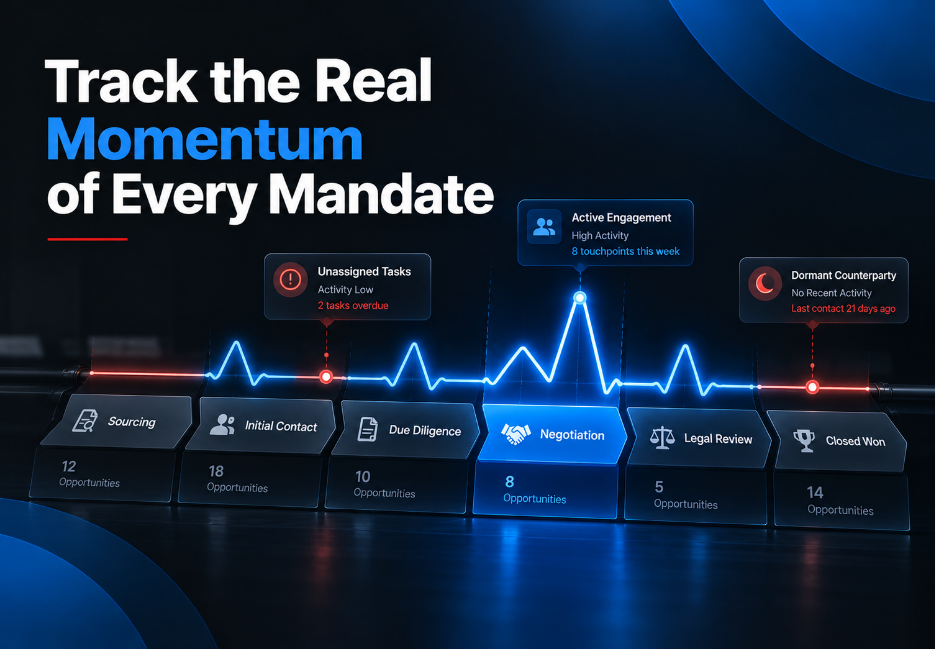
A deal can sit in the pipeline looking active while a critical follow-up is missed, a potential buyer goes quiet, or nobody owns the next step. For investment banks managing multiple M&A mandates, these gaps can remain unnoticed until they begin affecting transaction progress.
Traditional deal-stage tracking shows where a transaction stands but rarely explains what is happening behind that status. A mandate marked as “Negotiation” may still have unresolved documentation, delayed decisions, or limited counterparty engagement.
This is why M&A deal tracking software must go beyond stage updates. Deal teams need visibility into relationships, responsibilities, outstanding actions, and transaction milestones. Equally important, firms must protect sensitive deal information while giving management a reliable view of the overall pipeline.
Why Deal Stages Alone Cannot Explain Transaction Progress
A deal stage describes transaction status, not execution momentum. For Managing Directors and deal leaders, understanding this distinction is essential to identifying opportunities that require attention.
Deal Status Does Not Always Reflect Deal Activity
Consider two sell-side mandates in the negotiation stage:
- Mandate A: Buyer discussions are active, due diligence is progressing, and upcoming milestones have clear owners.
- Mandate B: Information requests remain unanswered, buyer engagement has declined, and follow-up responsibilities are unclear.
Both transactions appear identical in a basic pipeline report, despite having different prospects of advancing.
Deal Progress Requires More Than Stage Updates
Effective transaction monitoring connects deal stages with stakeholder engagement, outstanding commitments, and execution milestones.
For investment banking teams, this provides a clearer understanding of which mandates are progressing and which require intervention before delays affect execution.
The Five Information Layers Every M&A Deal Team Must Track
Comprehensive deal visibility depends on capturing the information that influences transaction progress, not simply recording changes in deal status.
Relationship and Origination Intelligence
Understanding how a mandate originated and which relationships influence it is essential for successful client coverage.
Deal teams should maintain visibility into five areas:
- Origination history: Record opportunity sources, previous client discussions, and relationships contributing to mandate development.
- Counterparty engagement: Monitor communication with buyers, sellers, financial sponsors, investors, and intermediaries.
- Deal ownership: Identify responsible bankers, execution teams, and individuals accountable for upcoming actions.
- Follow-ups and commitments: Track outstanding requests, meetings, responses, and agreed deadlines.
- Transaction milestones: Monitor due diligence, approvals, negotiations, documentation, and closing requirements.
Why Connected Information Matters
These records help bankers understand what has already happened, what remains outstanding, and which relationships require attention.
They also reduce dependence on individual bankers' knowledge when mandates involve multiple teams or change ownership.
Why Pipeline Transparency Must Coexist With Deal Confidentiality
Investment banking management needs visibility into the firm's pipeline, while deal teams need strict confidentiality around live transactions.
For integrated capital markets firms, balancing these requirements is an important operational challenge.
Management Requires Firm-Wide Pipeline Oversight
Managing Directors and senior executives need access to relevant information about:
- Active mandates and transaction progress.
- Pipeline value and potential fee opportunities.
- Outstanding milestones and execution delays.
- Deal ownership and resource allocation.
Without appropriate visibility, management may struggle to assess pipeline quality or identify transactions requiring intervention.
Deal Teams Must Protect Transaction-Sensitive Information
Bankers working outside a restricted mandate should not automatically gain access to confidential negotiations, counterparty discussions, or material non-public information.
Excessive information sharing creates confidentiality risks. Excessive restrictions leave management with an incomplete picture.
The objective is controlled visibility: management receives appropriate pipeline intelligence while information barriers protect confidential transaction records.
How M&A Pipeline Management Software Addresses Fragmented Deal Information
M&A pipeline management software connects transaction records, stakeholder interactions, and execution activities within a coordinated environment.
Fragmented Information Weakens Deal Execution
In many investment banking franchises, mandate information remains scattered across personal inboxes, spreadsheets, meeting notes, and disconnected systems.
This creates several challenges:
- Bankers spend time reconstructing previous client discussions.
- Deal leaders depend on manual updates to assess progress.
- Important commitments become difficult to track across teams.
- Pipeline reports may not reflect the latest transaction activity.
Centralized Deal Records Improve Execution Discipline
M&A deal management software brings relationship information, task ownership, and transaction activity into connected deal records.
M&A pipeline management tools also provide visibility into outstanding commitments, delayed milestones, and unclear responsibilities.
However, centralizing information is only part of the requirement. Firms must also maintain transaction confidentiality and preserve the institutional knowledge accumulated throughout each mandate.
How InsightsCRM Connects Pipeline Oversight With Transaction Confidentiality
InsightsCRM addresses two important requirements for investment banking franchises: controlled transaction visibility and long-term relationship intelligence.
Protecting Live Mandates Without Losing Management Visibility
InsightsCRM combines customizable deal workflows, pipeline dashboards, and transaction-level confidentiality controls.
Its capabilities include:
- Customizable deal workflows: Firms define transaction categories and milestones according to their M&A and advisory processes.
- Deal-team confidentiality: Access controls ring-fence sensitive transaction information from unauthorized users.
- Pipeline dashboards: Management reviews transaction activity, progress, and performance through centralized reporting.
- Activity tracking: Deal teams maintain visibility into responsibilities, communication history, and outstanding actions.
This distinction matters because information required for franchise oversight should not automatically be accessible to every banker.
Preserving Franchise Memory Beyond Individual Bankers
M&A mandates often outlive the bankers who originate them.
When important relationship information remains in personal notes or inboxes, a departure or coverage reassignment can disrupt transaction continuity.
InsightsCRM maintains corporate profiles, chronological engagement records, deal-related activities, and follow-up responsibilities within the firm's CRM environment.
Authorized incoming bankers can review recorded client discussions, understand previous counterparty engagement, and identify outstanding commitments without reconstructing the mandate's history.
This transforms accumulated relationship knowledge into an institutional asset rather than leaving it dependent on individual bankers.
What to Evaluate in M&A Deal Tracking Software
Investment banks should evaluate software against real transaction scenarios rather than rely entirely on feature comparisons.
Key Questions to Ask Before Selecting a Platform
- Pipeline visibility: Can management monitor transaction progress without exposing confidential deal information?
- Relationship continuity: Can a newly assigned banker review previous client interactions and outstanding commitments?
- Workflow flexibility: Can the platform reflect the firm's origination, prospecting, and execution milestones?
- Execution accountability: Can deal leaders identify delayed activities, stalled counterparties, and unclear ownership?
- Day-to-day usability: Can bankers maintain deal records within their existing communication and engagement workflows?
Why Workflow Fit Matters
A platform may offer extensive reporting capabilities but still create operational friction if its processes do not reflect how investment banking teams work.
The right software should accommodate the firm's mandate lifecycle, information barriers, and reporting requirements without creating unnecessary administrative work.
Better Deal Visibility Starts With Better Transaction Intelligence
Effective M&A deal tracking software should reveal more than where a mandate stands. It should show what is progressing, what is delayed, who owns the next action, and which information must remain confidential.
InsightsCRM brings deal tracking, relationship intelligence, transaction confidentiality, and management reporting into a capital markets-focused environment.
Request an InsightsCRM demo to explore how your firm can strengthen pipeline oversight, preserve institutional knowledge, and maintain execution discipline across M&A mandates.
FAQs
1. What is M&A deal tracking software?
M&A deal tracking software allows investment banks and advisory firms to monitor transactions from origination through closing. It organizes relationship history, deal ownership, transaction milestones, and outstanding actions to provide a clearer understanding of pipeline progress.
2. Why is tracking deal stages alone insufficient for M&A teams?
Deal stages indicate transaction status but do not explain execution momentum. A mandate may remain in negotiation despite delayed approvals, unanswered requests, or declining buyer engagement. Monitoring these activities provides a more accurate view of transaction progress.
3. How does M&A pipeline management software improve deal visibility?
M&A pipeline management software connects deal records, stakeholder interactions, milestones, and responsibilities. This gives deal leaders visibility into stalled transactions, outstanding commitments, and pipeline activity, supporting more informed management decisions.
4. How does InsightsCRM protect confidential M&A transaction information?
InsightsCRM provides deal-level access controls that restrict sensitive transaction information to authorized users. Its pipeline dashboards and reporting capabilities allow management to monitor deal activity while maintaining appropriate confidentiality around individual mandates.
5. How does InsightsCRM preserve relationship history when bankers change?
InsightsCRM maintains corporate profiles, engagement histories, deal activities, and follow-up responsibilities within the firm's CRM records. Authorized bankers taking over a mandate can access recorded relationship context and outstanding commitments, supporting continuity across transaction teams.


